
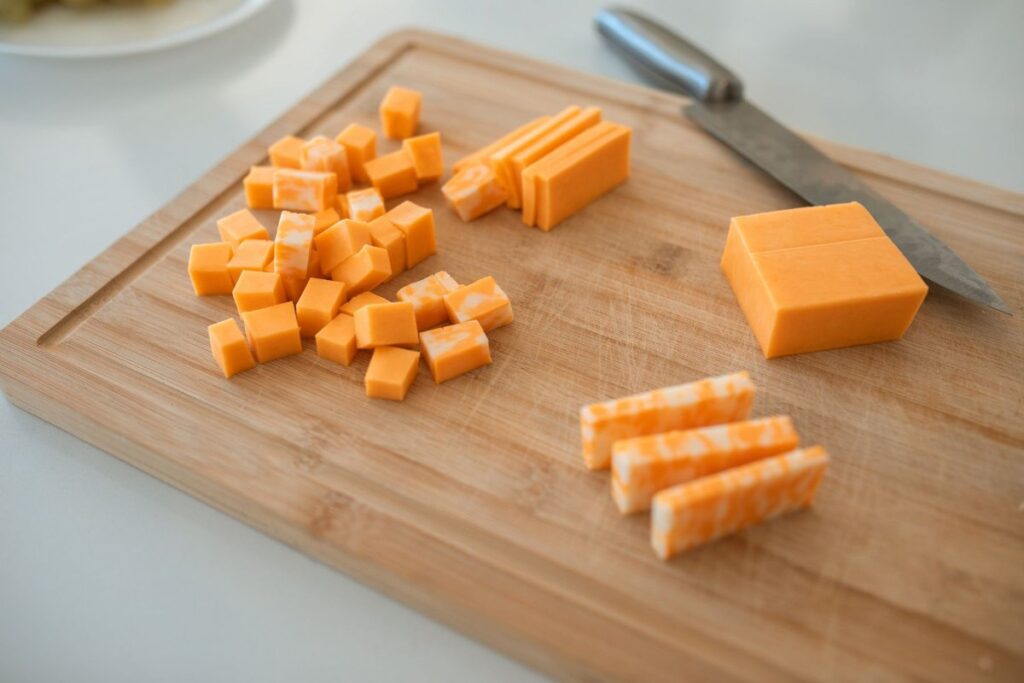
Yes, most cheese can be frozen. The National Center for Home Food Preservation says hard and semi-hard cheese keeps its quality for about 6 months in the freezer, but it may turn crumbly and mealy, though it keeps its flavour. That makes frozen cheese best for cooking: melting, grating and baking. Cream cheese, cottage cheese and ricotta don’t freeze well.
| Cheese | Freeze? | Freezer (best quality) | Best use after thawing |
|---|---|---|---|
| Hard: cheddar, Swiss, Parmesan, Colby | Yes | About 6 months | Cooking, grating, melting |
| Shredded or grated cheese | Yes, very well | About 6 months | Straight from frozen into dishes |
| Sliced cheese | Yes, with baking paper between slices | About 6 months | Sandwiches, toasties |
| Mozzarella (low-moisture block) | Yes | About 6 months | Pizza, lasagna |
| Soft: Brie, Camembert | Yes, with texture changes | About 6 months | Baked dishes |
| Cream cheese | Not well; turns grainy | — | Cooked dishes, dips |
| Cottage cheese, ricotta | Not well; watery | — | Cooked dishes only |
How to freeze cheese
- Cut blocks into portions of about 1 pound (450 g) or less, as NCHFP recommends, so you only thaw what you need.
- Wrap tightly in moisture-proof material: plastic wrap, then foil or a freezer bag with the air squeezed out. Vacuum-sealing works well.
- Shred or grate cheese before freezing if you’ll use it for cooking. Toss it with a little flour or cornstarch, or freeze it spread out on a tray, so it doesn’t clump.
- Label it with the date.
How to thaw cheese
- Thaw it in the fridge, in its wrapping, for a day or two for a block.
- Shredded cheese can go straight from the freezer into pasta bakes, pizza, sauces and soups.
- Use thawed cheese within a few days, and don’t refreeze it repeatedly; the texture gets worse each time.
Why does frozen cheese get crumbly?
Freezing forms ice crystals that break up the cheese’s structure, so it loses moisture when thawed. The flavour stays, but blocks can crumble when sliced. Aged, drier cheeses like Parmesan freeze best; high-moisture, fresh cheeses suffer most.
Cream cheese, cottage cheese and ricotta
NCHFP says these don’t freeze well: they turn grainy, watery or separated. You can still freeze them for cooked dishes like cheesecakes, lasagna or sauces, where texture matters less. Mixing cream cheese with heavy cream before freezing helps for dips and icings.
Cheese in a power cut
If your fridge loses power for more than 4 hours, US guidance says hard cheeses (cheddar, Colby, Swiss, Parmesan, provolone) and processed cheeses can be kept, but soft cheeses, shredded cheese and low-fat cheeses should be thrown away.
Quick answers
Can you freeze cheese slices?
Yes. Put baking paper between slices so they separate easily.
Can you freeze a block of cheese?
Yes, ideally cut into smaller portions and wrapped tightly.
Can you freeze cheese sauce?
Yes, but it may separate. Whisk it well while reheating.
Can you refreeze cheese?
Hard cheese that’s still cold or icy can be refrozen, with some loss of texture.
Sources: National Center for Home Food Preservation, Freezing Cheese (hard and soft cheese 6 months; crumbly texture; portion size; cream cheese, cottage cheese and ricotta don’t freeze well); FoodSafety.gov, Food Safety During Power Outage (which cheeses to keep or discard; refreezing).
Related: Can You Freeze Milk?, Can You Leave Butter Out? and Can You Refreeze Cheesecake?